Guests of CppCast
Want to be a guest on CppCast? Email us at feedback@cppcast.com.
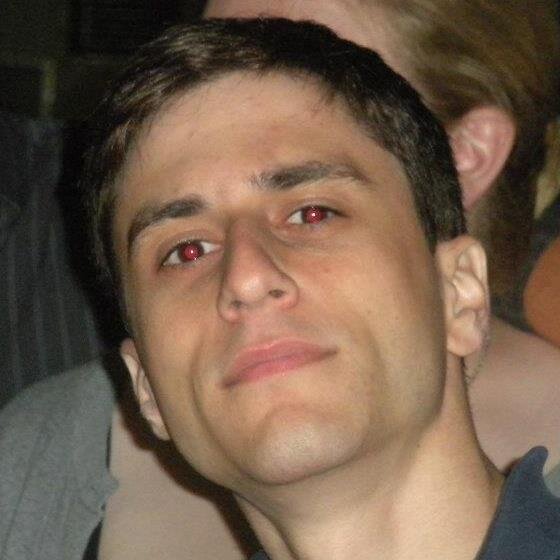
Matt Calabrese
Matt Calabrese is a software engineer working primarily in C++. He started his programming career in the game industry and is now working on libraries at Google. Matt has been active in the Boost community for over a decade, is currently a member of the Boost Steering Committee, and is a member of the Program Committee for C++Now. Starting in the fall of 2015, he has been attending C++ Standards Committee meetings, authoring several proposals targeting the standard after C++17, notably including a proposal to turn the void type into an instantiable type and a proposal for the standard library to introduce a generic algorithm for invoking standard Callables with argument types and argument amounts that may be partially calculated at compile-time or at runtime. He is also the author of the controversial paper “Why I want Concepts, but why they should come later rather than sooner”, which may have contributed to the decision to not include the concepts language feature in C++17.

Matt Godbolt
Matt is a developer at trading firm Aquatic. Before that he’s worked at Google, run a C++ tools company, and spent over a decade in the games industry making PC and console games. He is fascinated by performance and created Compiler Explorer, to help understand how C++ code ends up looking to the processor. When not performance tuning C++ code he enjoys writing emulators for 8-bit computers in Javascript.

Matt Klein
Matt Klein is a software engineer at Lyft and the creator of Envoy. He has been working on operating systems, virtualization, distributed systems, networking, and making systems easy to operate for nearly 20 years across a variety of companies. Some highlights include leading the development of Twitter’s L7 edge proxy and working on high-performance computing and networking in Amazon’s EC2.

Matt McCormick
Matt McCormick is a principal engineer on Kitware’s Medical Computing Team located in Carrboro, North Carolina. His experience spans multiple medical, biological, material science, and geospatial imaging applications. As a subject matter expert, he makes and stewards open source technical contributions to scientific image analysis communities. He has been coding in C++ since 2008, when his graduate studies got him to involved in the Insight Toolkit and CMake communities.
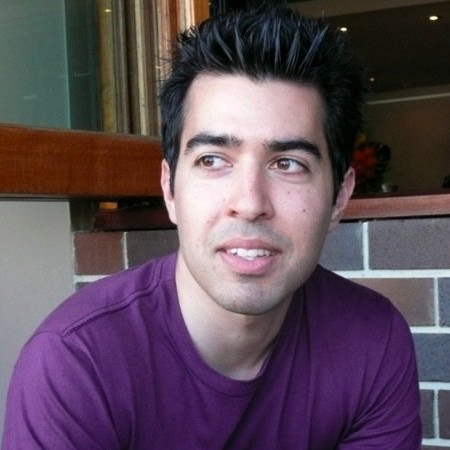
Matthew Fernandez
Matthew Fernandez is a Research Scientist with Intel Labs. Matt began his programming career building Windows GUI applications and designing databases, before moving into operating system architecture and security. He has a PhD in formal verification of operating systems from the University of New South Wales in Australia, and worked with the Australian research group Data61. In the past, he has worked on compilers, device drivers and hypervisors, and now spends his days exploring new tools and techniques for functional correctness and verification of security properties. On the weekends, you can usually find Matt in a park with a good book, hunting for good coffee or helping a newbie debug their code. He hopes to avoid saying “monad” on this podcast.

Matthew von Arx
Matthew von Arx has been working in Satellite Communications for 9 years, and has always had a focus on Software Engineering. This has grown into a passion for C++.

Michael Afanasiev
Michael Afanasiev is currently working on his PhD in Geophysics. He became interested in programming and high performance computing during his BSc in Computational Physics, playing around with simulations of star formation. After a brief attempt to lead a roguish and exciting lifestyle as a field Geophysicist, he was brought back to the keyboard during a MSc, where he began working on full waveform inversion (FWI). In 2013 he moved to Switzerland to continue working on FWI as a PhD student at ETH Zurich, where he’s currently wrapping things into a thesis. He spends most of his time writing scientific software, wandering through the alps, and atoning for the times he repeated the mantra “Fortran is the best language for scientific computing.”